
 Espace enfants
Art and History Museums
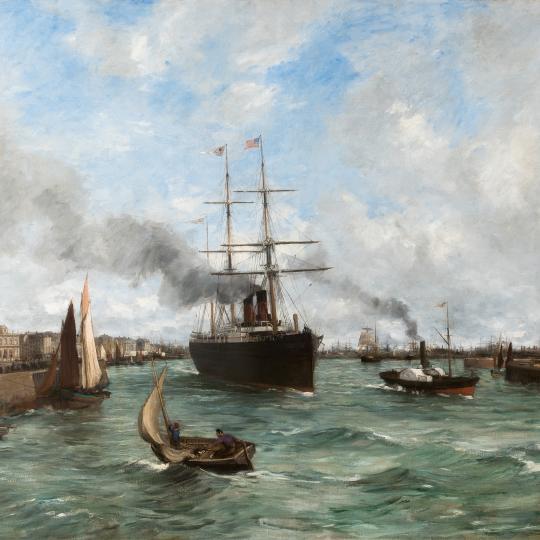
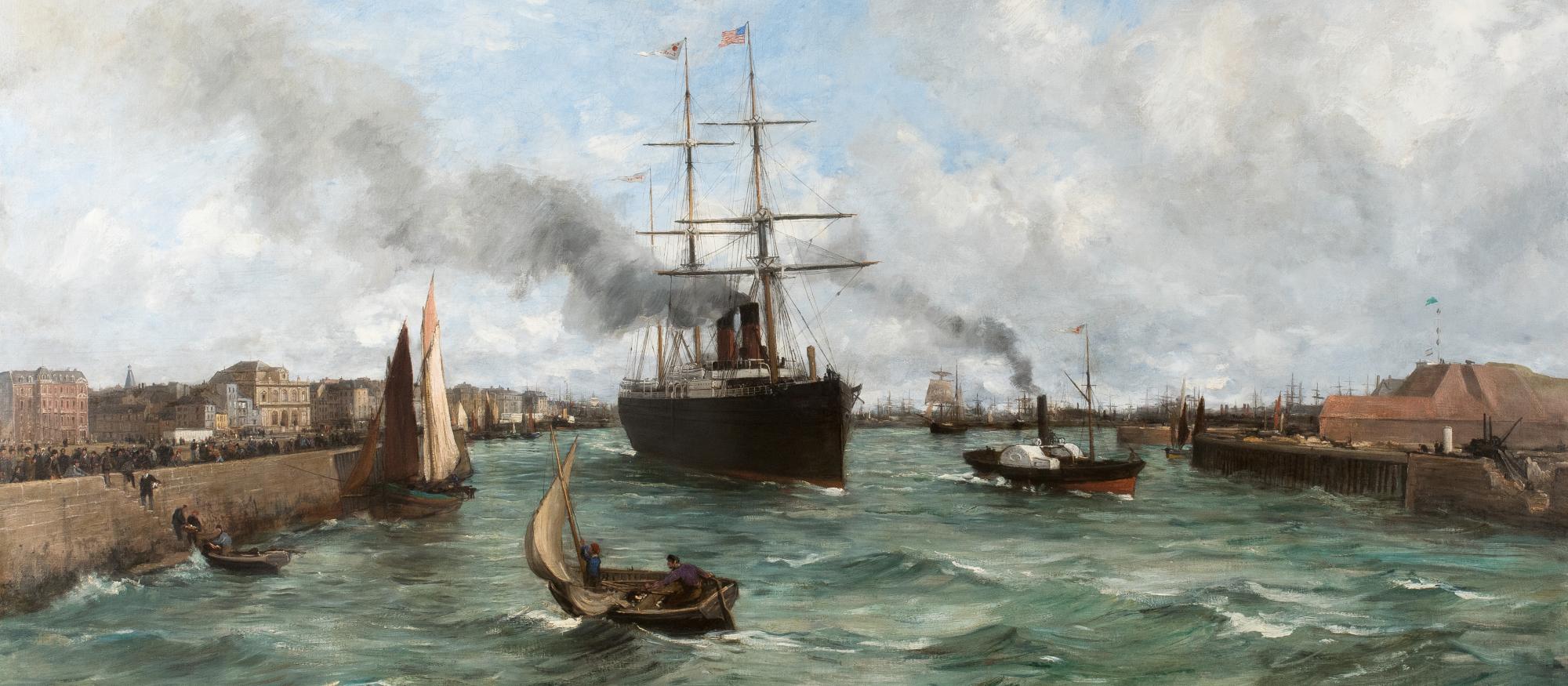
Musées d'Art et d'Histoire are three museums and monuments listed as historic buildings because of their outslanding. There are composed of two mansions (one of the 17th century, the other of the 18th century) and an abbey (11th century - 18 th century).
Shipowner's mansion
Around 1790, Paul-Michel Thibault (1735 – 1799), the architect of le havre fortifications and hydraulic engineer, decided to build a mansion in the wealthy and coveted district of the city.
In 1800, Martin Pierre Foache, a wealthy merchant, bought the house as a winter residence and installed his trading office there. He asked another architect, Pierre Adrien Pâris, former designer for the king, to decorate the interior.
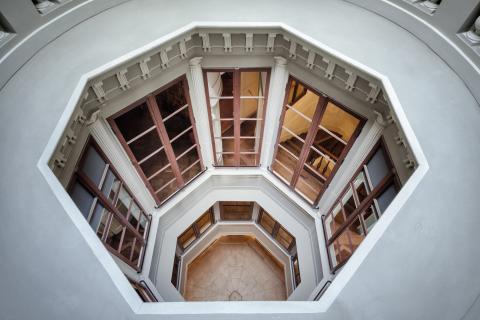
The façade is typical of the architecture of the Louis XVI period. It is extremely carefully designed ; the parquet flooring of rare and exotic wood adjoins stone-tiled floors with geometric designs. The rooms are laid out around a central octogonal light-well.
Graville Abbey
1er April to 1er November 2026
Graville Abbey, located between Deauville and Etretat, overlooks Le Havre and the Seine estuary. Its abbey church, a masterpiece of Romanesque art in Normandy, underwent several periods of construction between the 11th and 13th centuries. The convent buildings (11th–18th centuries) house a museum with some of the finest religious statuary in Normandy. Medieval stonework, liturgical objects and a collection of models of houses from the late 19th and early 20th centuries illustrating human habitation complete the ensemble. The Abbey is surrounded by terraced gardens that are freely accessible for walking and leisure activities.

Dubocage de Bléville Hotel Museum
TEMPORARY CLOSURE
After a nine-year voyage to China, merchant seafarer Michel Joseph Dubocage de Bléville (1676–1727) came back to Le Havre and purchased this mansion. With his son, he created there an important merchant shipping firm with a cabinet de curiosités. In the museum, temporary exhibitions about Le Havre’s history and maritime trade can be discovered.
The seventeenth-century main buildings look onto a french formal garden.
